


This essay is adapted from the Frankly episode posted on June 6th, 2025 titled, “10 Qualities That Could Change the Future: The Seeds of New Cultural Mitochondria.”
For those becoming aware of our accelerating and converging global crises, what I call The Great Simplification, a question arises: what kind of humans do we want to be amidst the chaos of our teetering systems and unsustainable expectations for the future?
Following a previous Frankly describing the economic Superorganism, I thought to extend this biological metaphor. Those of us engaging with these challenges might think of ourselves as mitochondria for a more life-affirming culture in the future.
Those of us who took Biology 101 might remember that mitochondria generate most of a cell’s energy. They are passed from mother to child, shaping the genetic composition of generations to come. We’re able to trace mitochondrial DNA back through hundreds and thousands of years of ancestry – indicating which individuals were able to pass on their traits. But mitochondria are not just isolated power plants. They are increasingly understood as social organelles: communicating with one another and with the cell nucleus, forming networks, synchronizing their behaviors, specializing in different functions, and depending on one another to support the health of the larger organism.
Perhaps by cultivating and embodying specific behavioral characteristics today, individuals (and eventually groups) could become “cultural mitochondria,” influencing the traits and values of generations of humans to come.
But before we do anything “out there,” we have to take care of what’s “in here.”
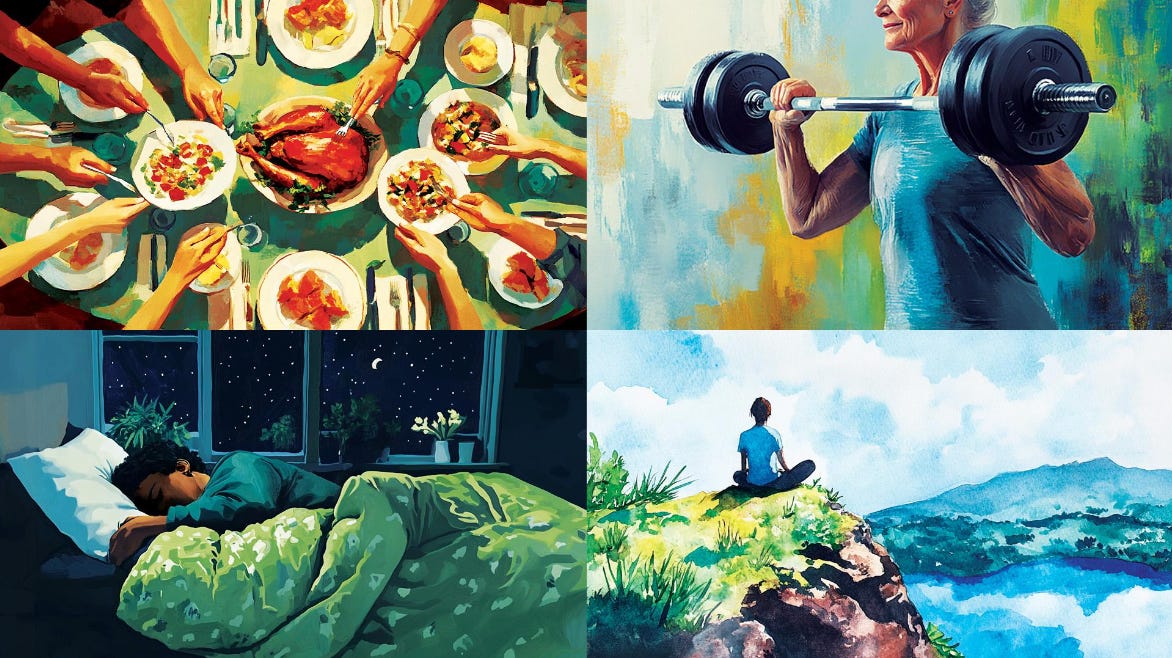
A dysregulated nervous system can’t hold space for new ideas or regenerative action. This is where the concept of “self-care” comes in. The basics of maintaining physical and mental health – nutritious food, quality social time, deep rest, and engaging movement or exercise – aren’t indulgences. They’re biological prerequisites for resilience. That said, caring for yourself is typically much easier said than done…and often only achievable when we start prioritizing less rather than more. Taking the time to prioritize our well-being (especially when time is so limited) also forces us to distill the projects and ideas that truly feel important to us.
In simpler terms: as individuals, we cannot continue to contribute to our broader communities and world if we’re burnt out and exhausted. If we are to become the cultural mitochondria of the future, self-care is a vital prerequisite to everything else I’ll outline here.
Finding Groundedness
After the prerequisite of caring for the self, the first mitochondrial characteristic is groundedness. A grounded person is tethered – to their breath, their body, and to their environment. They are present in both their inner world and in their immediate surrounding.

In the context of our ancient ancestors, this way of being may have been the default in a simpler and slower world. But in an age of information overwhelm, remaining grounded is a challenge and subsequently has become a foreign state of being for many of us. If we can practice re-tethering ourselves to our bodies and the present moment, it becomes just a little easier to remain anchored to what’s important.
Being grounded also means knowing when to pause. It means feeling our feet on the Earth, sensing our breath, and noticing when we’re spinning out so that we can take a moment to be still. This practice doesn’t make the world less chaotic, but it gives us a foothold to engage in it with some clarity and equanimity.
In systems terms, grounded individuals add stability to the networks they touch. Like a stabilizer in a complex web, they dampen volatility. If enough of us do that, we might be able to change the behavior of the whole system.
So before we try to fix anything “out there,” we need to practice rootedness inside our own minds and bodies. The mitochondria of a future culture will need deep taproots to better engage with the complexities of the world and to help others do the same.
Embodying a Post-Tragic Mindset
Many of us struggle with the idea of doing things we enjoy while the world feels like it’s falling apart. The best framework I’ve found for counteracting this idea comes from Marc Gafni’s ‘post-tragic’ concept. While “pre-tragic” refers to when a person is unaware of the world’s existential problems, and “tragic” comes when they’re fully immersed in grief of these realizations, Gafni describes post-tragic as when, “...the person or culture is able to once again participate in the elemental joy of living. This happens when the individual (or culture) is able to re-connect to the core Eros and aliveness of reality.”

This concept is critical for grieving the abstract: for ecosystems, for unborn generations, for the world that could have been. Unless we metabolize that grief, it has the potential to fester into cynicism or paralysis, ultimately rendering us ineffective and unhappy. A post-tragic stance means understanding the world around us, accepting what is broken, grieving it deeply, and still rolling up our sleeves to play a role.
Intentionally processing our grief has further benefits: some studies show that grief rituals enhance individual and collective meaning-making. But grief is never a one-and-done event. Many of us need to repeatedly process grief in (and for) the world ahead while we strive to attain a “zone of acceptance.” If we compost that emotional energy into a more productive state, that zone of acceptance can lead us to potential action, engagement, and perhaps even more aliveness.
Cultural mitochondria won’t be the people who never feel pain, rather it will be people who let pain become fuel to create a better world.
Strength Through Belonging
Onto the next trait of cultural mitochondria for the future. Humans are social creatures, and our nervous systems are wired for something even deeper than connection: co-regulation. When we’re seen, heard, and respected, our bodies shift into states of creativity and trust. In fact, our nervous systems co-regulate with others to whom we feel connected, making quality relationships critical components for creating resilience and meaning.
Ultimately, this distributed network and built trust can create a stronger, more cooperative society as a whole. The implications of this are that social capital – real relationships with other humans based on trust – will outperform mere material wealth in any future scenario. The feeling of belonging is a biological necessity for healthy individuals and a prerequisite for resilient societies. In times of stress and upheaval, having a network of mutual aid and care becomes adaptive and perhaps more valuable than any material stockpile.
Such co-regulation doesn’t require agreement on everything. What it requires is shared investment in each other’s wellbeing and a collective orientation toward something larger than ourselves. In a fraying world, islands of coherence – communities of trust and cooperation – can function as places where life holds on and regenerates.
All over the world, a committed few people who are connected in trust can carry the signal of a different kind of society – one based on solidarity and care. This is part of the scaffolding for whatever comes next on a planetary scale.
Attention is Our Most Powerful Capability
Another aspect of becoming cultural mitochondria is paying attention to…well, attention.
We live in an economy that monetizes our gaze, where algorithms fight to hijack our awareness and steer it toward outrage, envy, or despair. In an age of infinite distraction, the ability to focus our attention is nothing short of revolutionary.
In his second TGS appearance, Iain McGilchrist said that the greatest gift humans can give to another human is attention. It’s how we connect, how we learn, how we love, and how we build new cultural patterns. When we give someone or something our full attention, without agendas or multitasking, we affirm their value. At that moment we’re saying, “You matter.” When we’re fully here, others notice. They feel it, and they often respond in kind. This is how social fields shift: one authentic connection at a time.
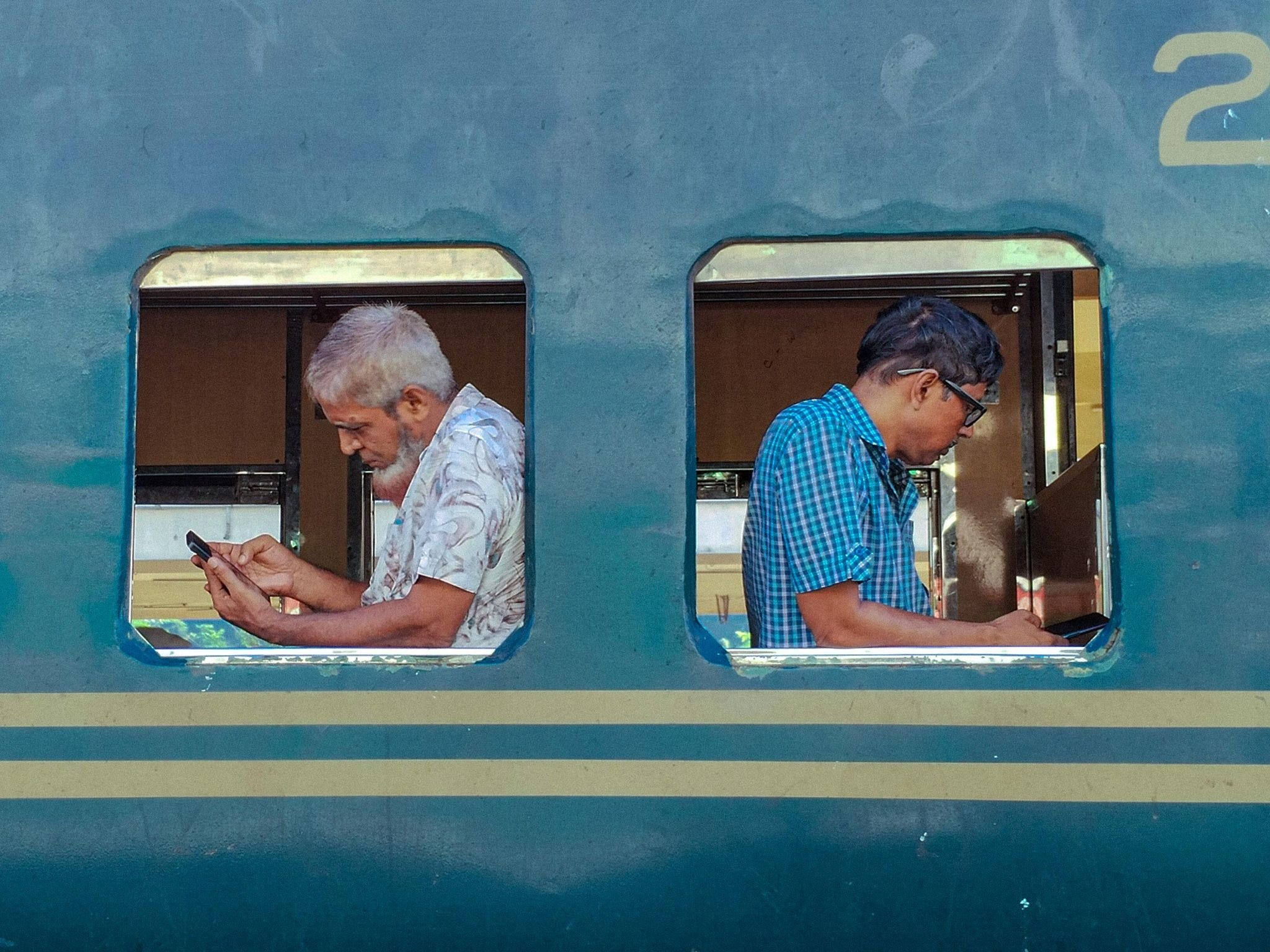
The more we can be intentional and selective with our attention, especially with other humans, the better prepared we will be for a time when we are truly dependent on those around us. In the face of increasing tech distractions, it behooves us to protect our mental ecology like a sacred grove, because ultimately, what we attend to becomes the world we live in.
Ability to Engage in Systems Thinking
In order to become cultural mitochondria, we also need to be able to zoom out and see the bigger picture.
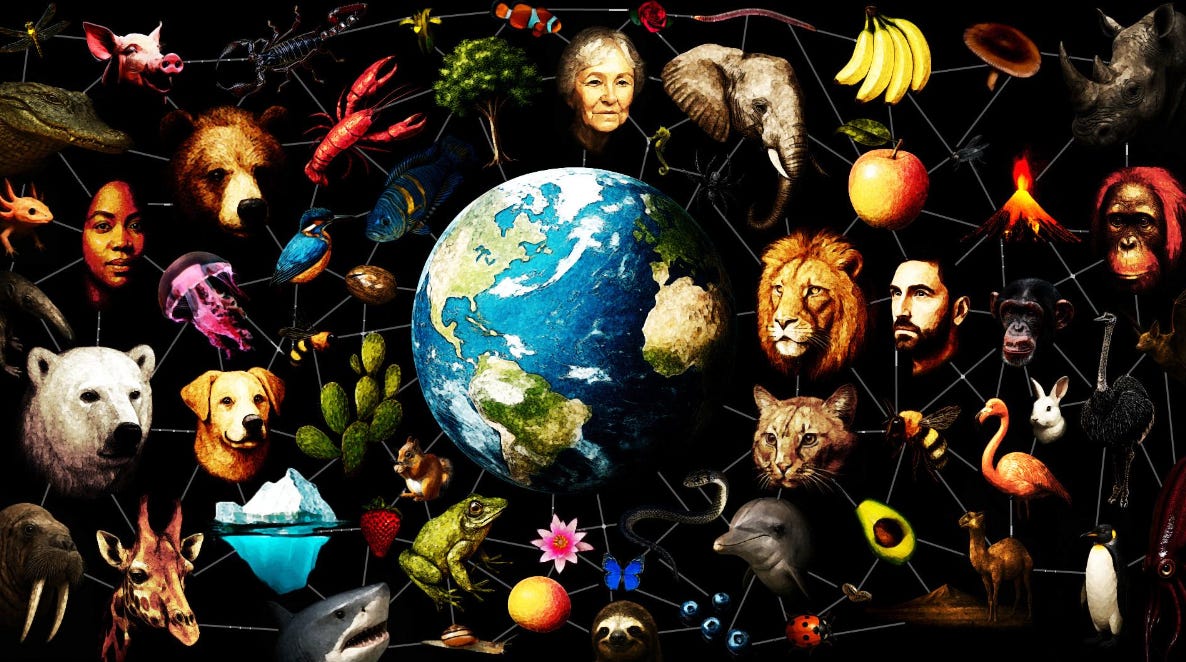
For our ancestors, focusing on cause-and-effect served as a critical method for safely navigating their environments. We still use this strategy within our complex global systems, but the problems we face today – a degrading biosphere, financial overshoot, and eroding trust in our institutions – aren’t linear. They exist within a nested, feedback-laden web of relationships.
Attempting to anticipate the results of any given action requires an understanding of the thresholds, delays, and interdependence of different entities. These are only visible by taking a step back and viewing them from a wide-boundary perspective.
This way of thinking also necessitates deep humility and comfort with uncertainty. Because even if you think you understand the system, there will always be unexpected consequences for a given action. Ultimately, we will have to let go of our blame and realize that systemic factors are often much more responsible than the actions of any individual. To think in systems is to let go of the illusion of control.
Radical Restraint
Alongside zooming out, we need to zoom into our own habits and lifestyles with respect to our external environment.
I believe in a culture that constantly promotes “more,” choosing “less” becomes a radical act. Restraint – whether it’s refusing excess consumption, dopamine-driven distractions, or unhealthy norms – is also a reclaiming of personal sovereignty.
Beyond the material world, “less” also refers to the discipline to say “no” in cultural situations where something feels wrong. It means offering a different option where resiliency, contentment, and life are the valuable metrics of success.
While it may not feel like one individual's contributions make a difference, recent research on non-violent protests indicate it could take as little over 3.5% of us to create a cultural movement toward valuing restraint.
Status Awareness (and Liberation)
The self-awareness to choose “less” goes along with another type of self-awareness, this one in terms of our own worth.
Our growth-dependent system thrives on status-seeking: likes, titles, subscriber counts, and displays of wealth. If we recognize that no one wins a game designed to devour its players, we open an escape hatch from the status treadmill we’re currently running on, which is powered by depleting and mostly invisible fossil hydrocarbons.
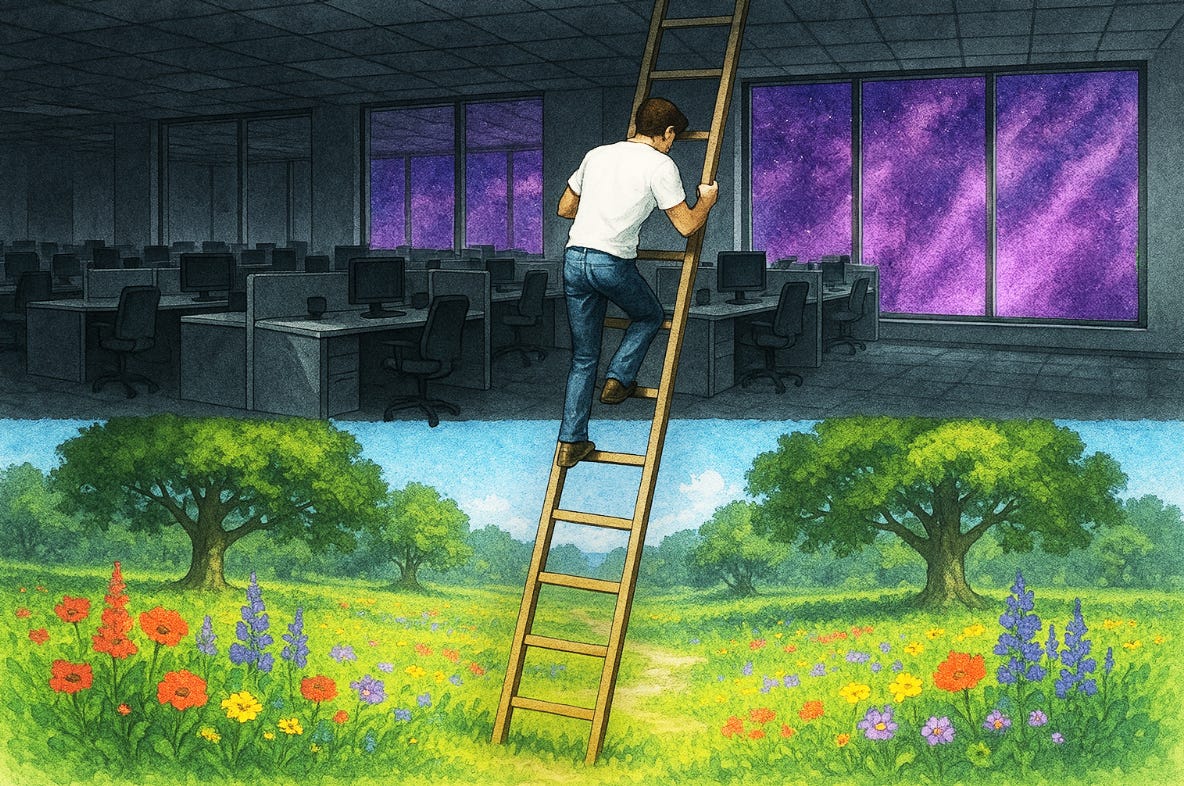
As individuals, we can choose to prize depth over display. Practicing the cultivation of self-worth through internal motivation, rather than external validation, can start building the muscles and behaviors we need for a different way of life.
The mitochondria of the future will see the current shallow and consumptive status game as rigged… and be able to walk away from it.
Feeling Interconnection
I’ve been deeply feeling this next mitochondrial trait over the past years, and it has propelled a shift in my worldview.
For as long as I can remember, I’ve loved nature, plants, and animals. But throughout my life, I was always looking at them as something separate from myself – as something to be held in awe and protected from a distance. I have always known that I share ancestry with all the majesty of life on Earth, but I went many years not actually feeling that within myself. It’s one thing to know we’re part of the web of life, it’s another to feel it viscerally and daily.
Indigenous wisdom and deep ecology have long told us what science is just beginning to grasp – that life is relational. We are not separate from nature. We are nature. And living from that awareness shifts our ethics, our timelines, and our decisions.
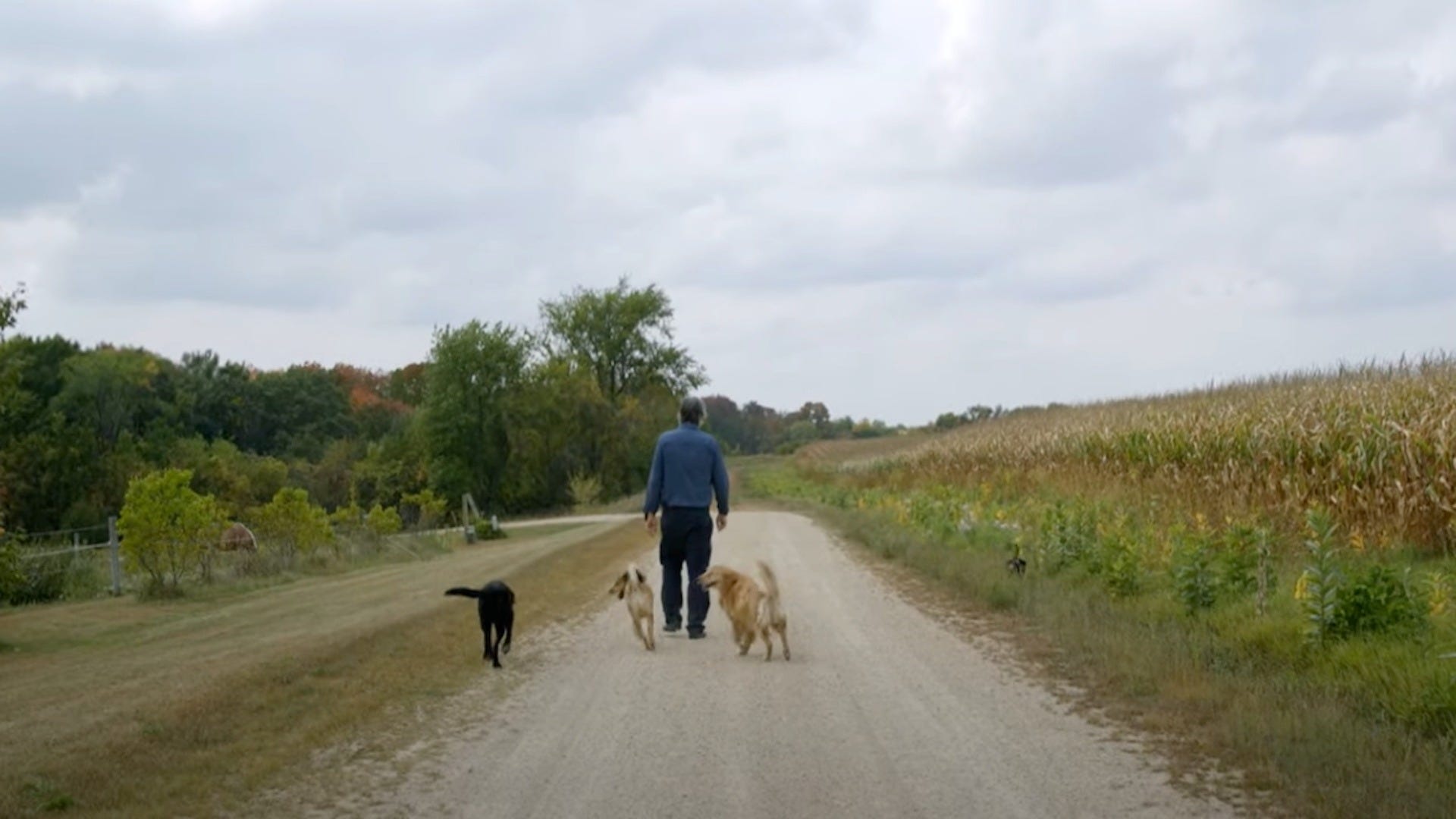
Now, whenever I go for a hike or out to my sit spot, I focus on the feeling of meshing and merging with the ecosystem around me. That feeling of interconnection grounds the rest of this work.
Emergent Orientation
Another trait has to do with how to approach shifting the future to a better-than-default timeline.
From Degrowth to Ecomodernism, many groups who see something wrong with the world believe that we just need to add a few more controls to our system. Then we will somehow be able to engineer our way out of its decline.
The reality is we can’t engineer the future. The best we can do is plant the seeds of change and nurture new systems to emerge as the old falls apart.

In dynamic systems like ours, small changes in starting conditions can create vastly different outcomes. This is the heart of the concept of emergence. By making small changes now – in our relationships, habits, and cultural stories – we alter what becomes possible.
Emergence means embracing iteration over perfection and curiosity over control. It means tending our cultural seeds patiently and trusting they will one day blossom.
Joy and Play

To be able to hold the gravity of collapse – or the Great Simplification, if you prefer – while still retaining levity and joy is powerful. Play, humor, music, and dance are not distractions from building a better world. They’re how we metabolize and remain whole, while also building trust and resilience with those around us. Humor and the like are functionally survival traits – they create space and camaraderie between a group.
In the long descent of the Carbon Pulse, sharing these moments with others will be everything. I think integrating these things into your life, despite the circumstances (or perhaps because of the circumstances), would be one of the characteristics of the emergent mitochondria of the next culture.
Small Changes Toward a Different World
I don’t see all these traits as boxes to check – more like muscles to exercise and grow. The people who embody any amount of these traits are the scout team for a different, but not necessarily new, way of living. They’re needed to seed the post-carbon pulse possibilities that will hopefully become the roots of a wiser culture. Even if we didn’t face these existential challenges, shouldn’t we all be living like this anyway?
More importantly, this awakening isn’t individual. It’s collective. We don’t need millions of people to be perfect, we just need some people to start making small changes and to become the beginnings of cultural mitochondria for future generations. It starts with us, here and now.
The systems we’ve built are showing cracks. As they crumble, those who embody these traits might just become the ancestors of more ecologically-aligned future generations who thrive in connection with the rest of life.
Thank you for reading – until next time.
Want to Learn More?
If you would like to see a broad overview of The Great Simplification in 30 minutes, watch our Animated Movie.
You can also find additional resources on our website.
Want to support The Great Simplification podcast?
The Great Simplification podcast is produced by The Institute for the Study of Energy and Our Future (ISEOF), a 501(c)(3) organization. We want to keep all content completely free to view globally and without ads. If you’d like to support ISEOF and its content via a tax-deductible donation, please use the link below.
This is the first I've encountered Marc Gafni’s nice ‘post-tragic’ name for what the late Revd. Michael Dowd called the 'post doom' mindset (or what I call dark optimism):
https://www.youtube.com/watch?v=MR0C8h7go40
Nearly a century ago, the late Viktor Frankl called it "tragic optimism". But by whatever name, it's as old as human suffering and insight, and indeed both profoundly necessary to, and endlessly rediscovered in, such times.
My floundering, worn out mitochondria felt this, and it ignites the memory of fiery connections of community and aliveness.