


This essay is adapted from the Frankly episode posted on June 5th, 2026 titled, “Uphill Futures in a Downhill World,” which is from the series “How to Think About the Future.”
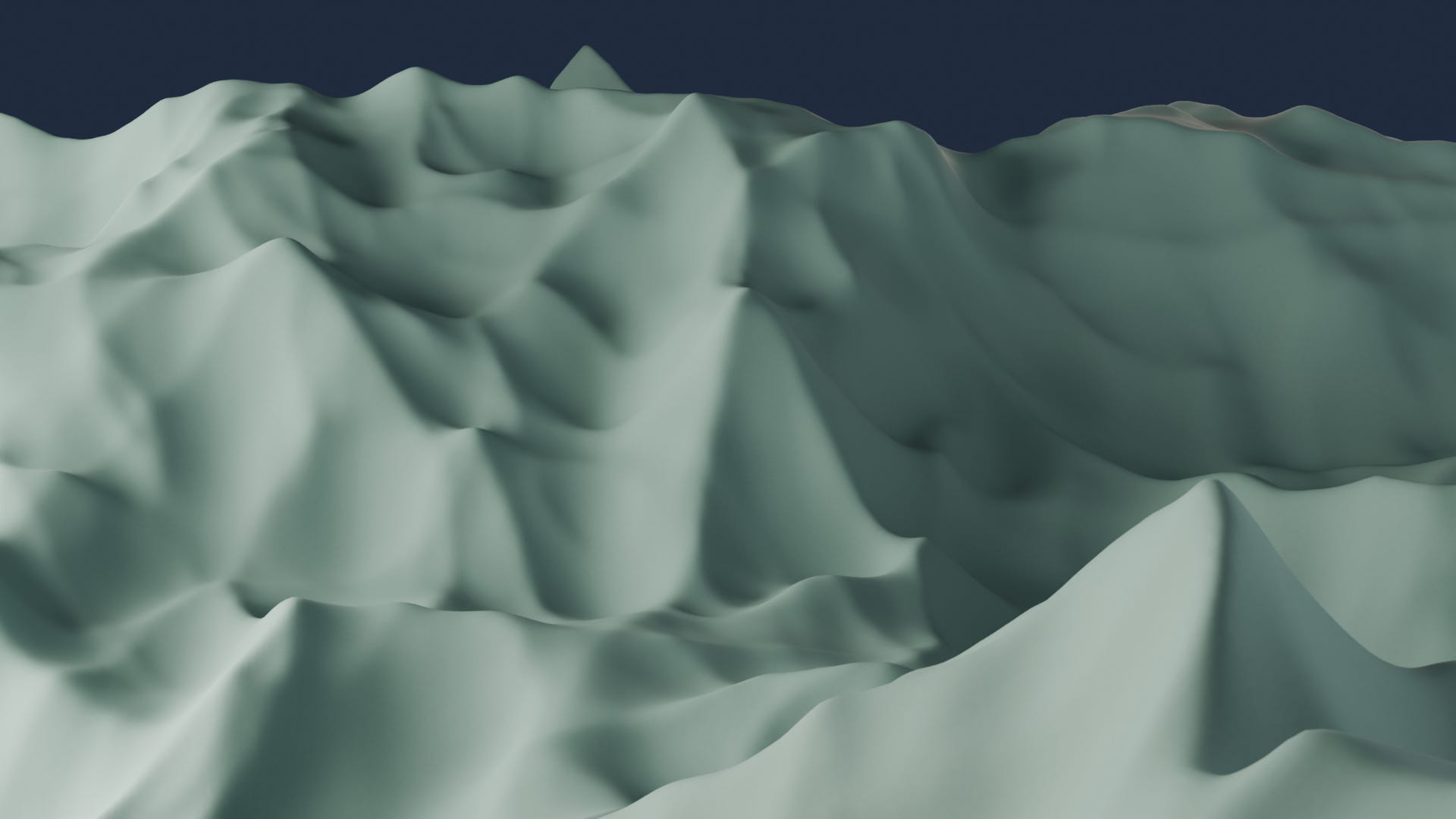
Good morning. This essay is the third part of my series, “How to Think About the Future,” where I invite listeners to dive into scenario building, and to imagine what it’s like to live in different versions of the reality that lies ahead.
I keep making the series longer because, as most of you tuning in here feel, we’re approaching a really serious juncture in our global economic situation and our culture. The hope is for more people to be able to visualize, discuss, and engage with all the unknowns steering toward life and continuity, and away from dystopia. Though some dystopian things are probably now baked in…and indeed are happening now.
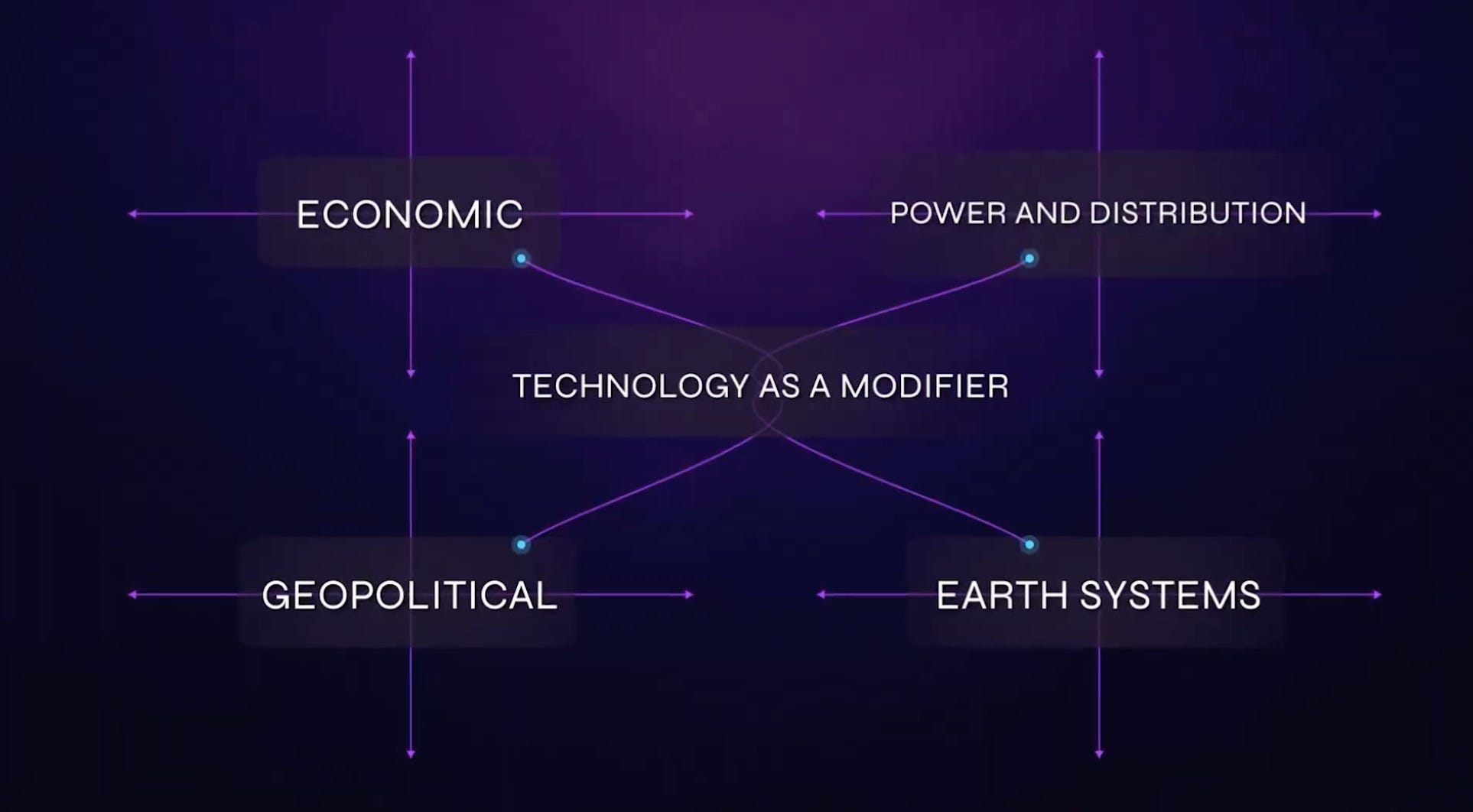
In part one, I discussed why it’s helpful to hold the future as a landscape of possibilities rather than being overly certain about one future. This is especially important in a dynamic world that has coupled systems, phase shifts, and shortfall risks. In the second part, I built four grids of variables that will be core components in shaping the future: economic direction, power distribution, geopolitical relations, and Earth systems. I also highlighted why technology should not be considered good nor bad, but instead an amplifier acting on whatever system on which it resides.
In part four, the next part of this series, I aim to combine sections of those four grids into composite worlds. These will be specific futures that are descriptive enough that you can feel the difference between what it might be for us to live inside one versus another. But before I do that, I decided to add one more conceptual tool.
The composites I’m going to build are not just a list of possible futures sitting side by side with equal likelihood. They all reside in a landscape, and I think the contour of that landscape – which valleys are deep, which ridges are steep and hard to cross, and which routes flow downhill or uphill from where we stand right now – matters enormously. All these concepts come from biology and ecology, and in my opinion, are pretty useful for thinking about where human civilization might be headed.
Which futures are we most likely to arrive at if we do nothing? And what will it take to climb towards the futures we want?
The Waddington Landscape
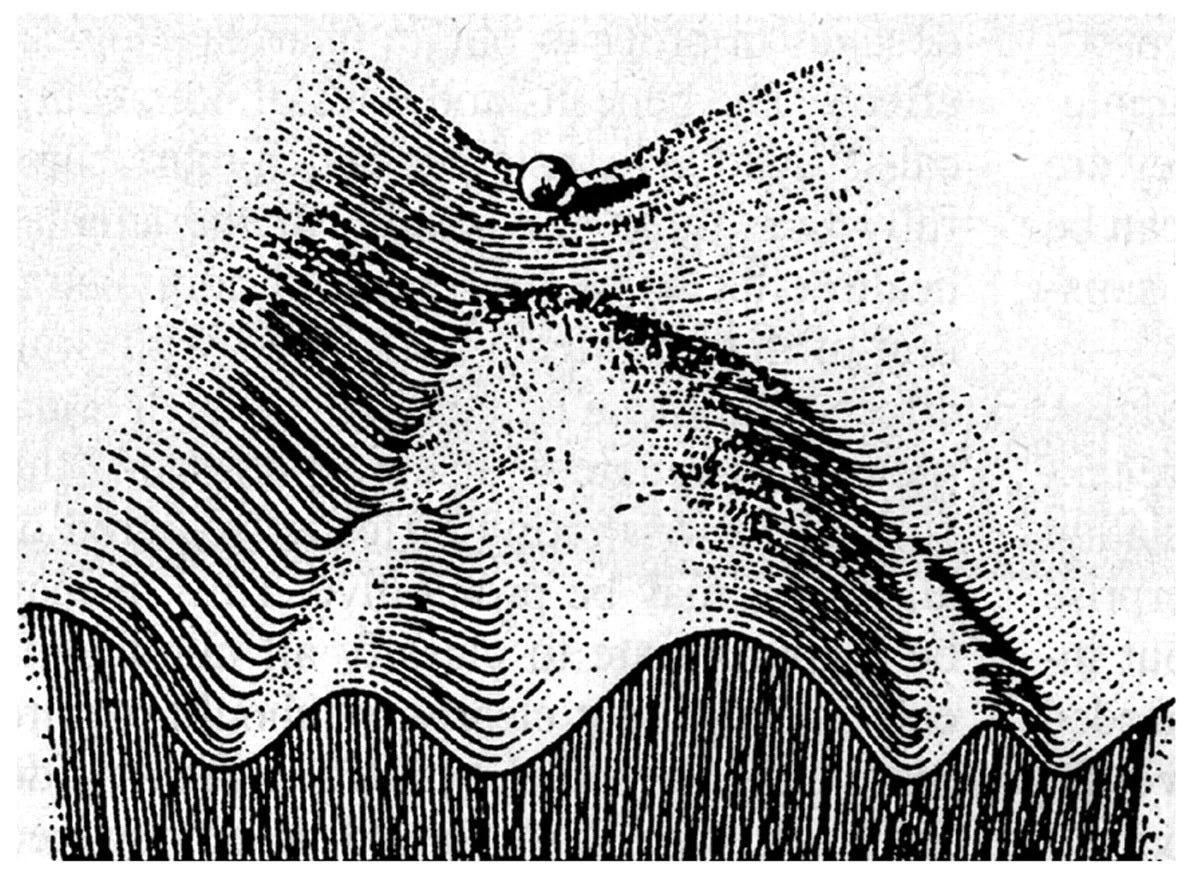
Let’s start with the biology underpinning this concept. In the 1950s, a developmental biologist named Conrad Waddington was trying to understand how a single cell – a fertilized egg – eventually becomes an entire organism. Every cell in your body carries the same DNA. They start from the same place on the map, if you will – but a heart cell, a liver cell, and a brain neuron end up as completely different things. How does a cell that starts with all the possibilities open to it end up committed to one specific pathway?
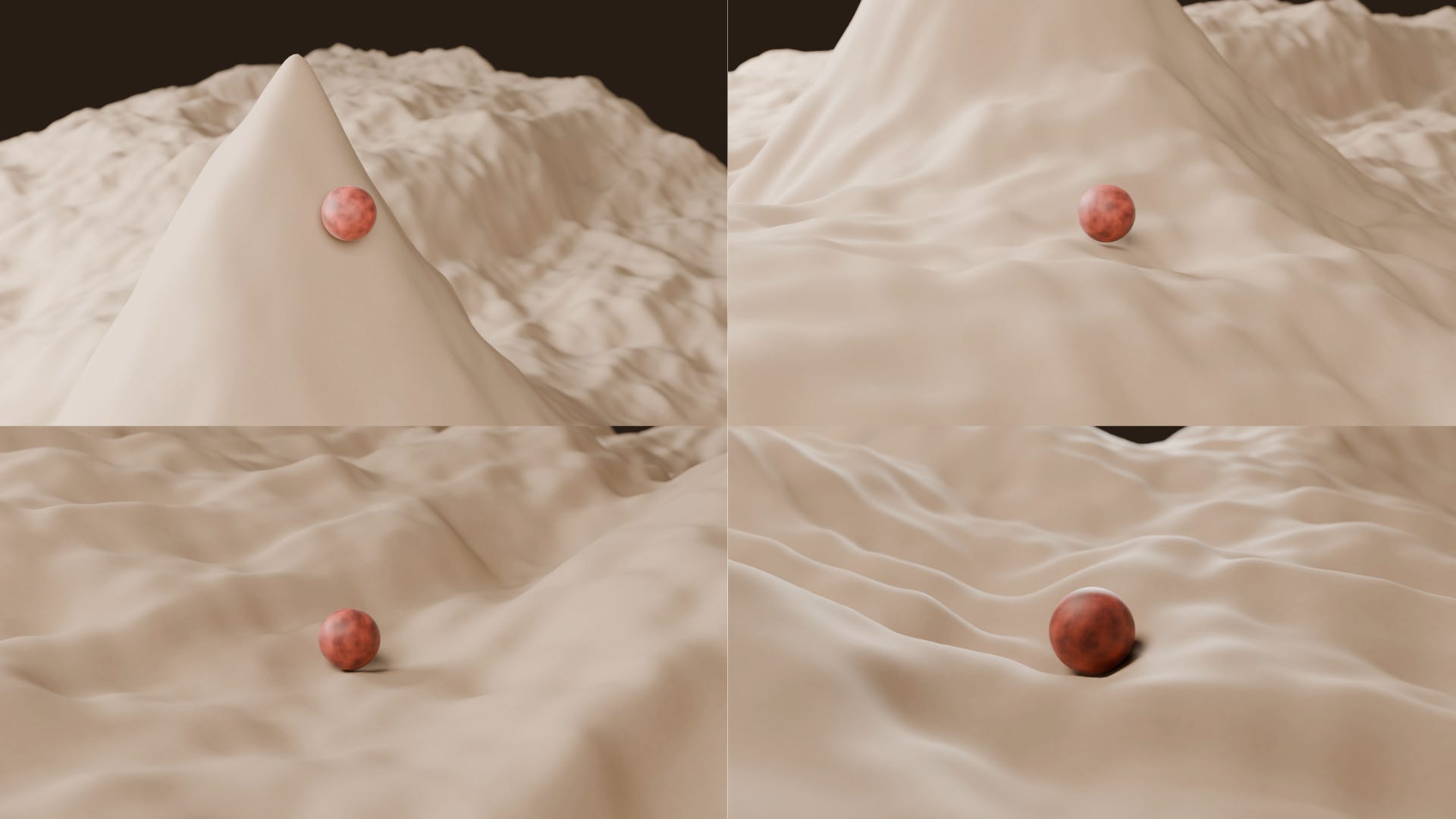
Waddington imagined all this as a landscape. Picture a ball sitting at the top of a series of rolling hills and valleys. That ball represents a stem cell that has the potential to become many different things. As it develops, it rolls downhill and enters a valley. In that valley, there’s a fork, and when the cell enters one branch, it forks again. At each fork, some of what was previously possible to that cell closes off. By the time it reaches the bottom of a particular valley it’s now committed to being, for instance, a heart cell. It will never again be a stem cell, nor any other type of cell.
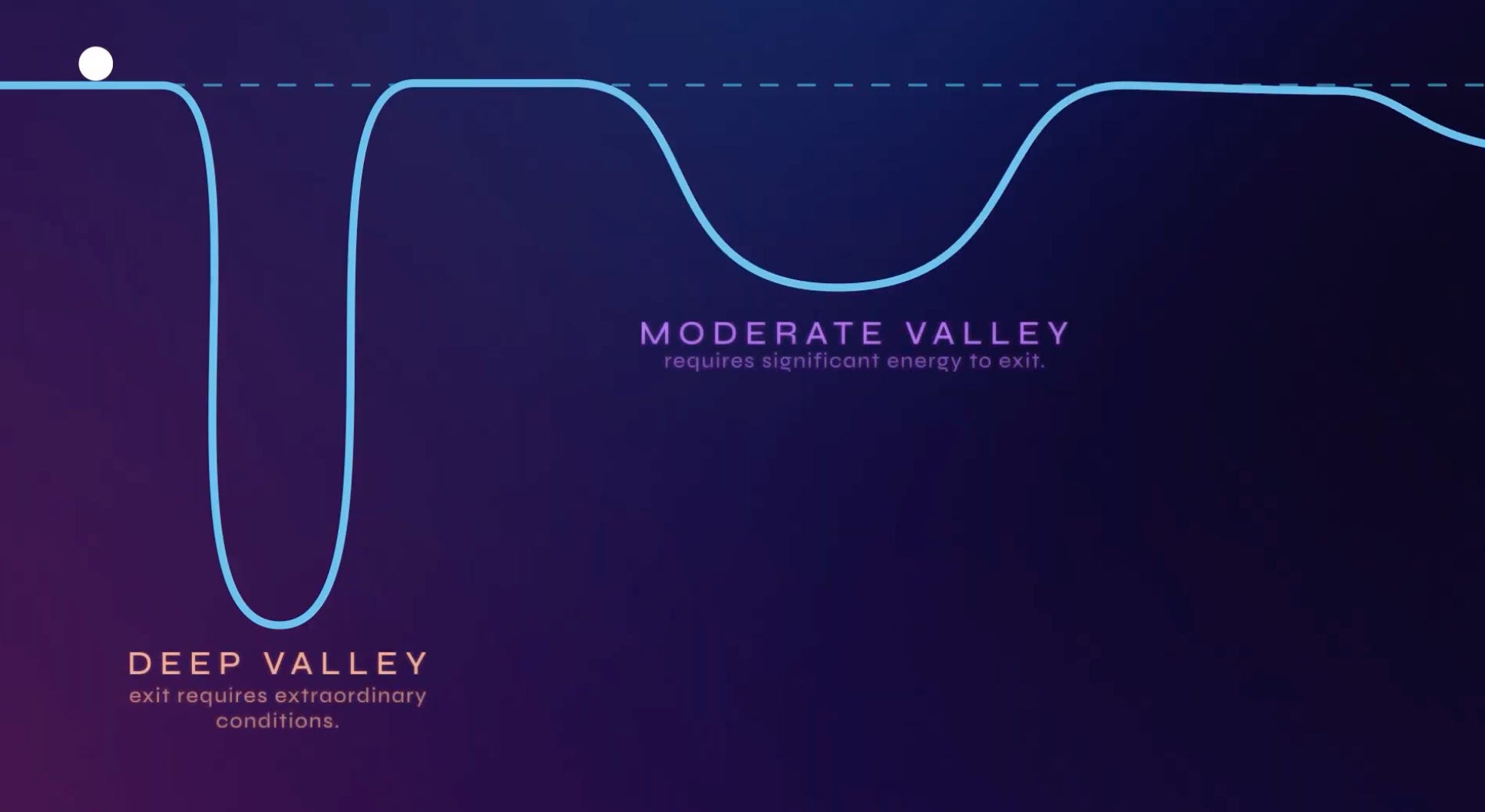
The valleys in this landscape are not all the same depth or size. Some are deep and have very steep walls, and once a cell enters it ends up staying because the constraints to leave are quite strong. Some valleys are quite shallow, and a small perturbation, some chemical signal, or a mutation might push the cell out and into a neighboring valley. The ridges between those valleys also vary in height: some transitions between cell states are relatively easy, while others would require enormous energy or very specific conditions that rarely occur naturally.
I think this way of looking at a situation – with valleys and ridges and mountains – is useful because I think it maps directly onto human civilizational futures. When we imagine, discuss, and work toward various futures, we’re not choosing from a list of possible futures the way you would choose from a restaurant menu, where everything is equally available and the only question is your preference. We’re also not sitting at the top of a series of rolling hills and valleys like our imagined cell. We’re already rolling through a moving landscape with a shifting topography.
I would argue that most futures are downhill from where we currently are. By downhill, I mean the path of least resistance, or the futures that current momentum and incentives already favor. The ones that take the least new energy or coordination to reach. By contrast, uphill futures are the ones that require sustained effort to climb toward and sustained effort to stay in once we arrive there.
Once we find ourselves deep in a particular valley, the high walls constrain the possible next moves. A farmer in Malawi or a software engineer in San Francisco are standing in very different parts of the landscape. So the uphill futures for one community may be the default valley for another. The focus here is the systems we share in common, not a specific location in the landscape.
Aquatic Tipping Points
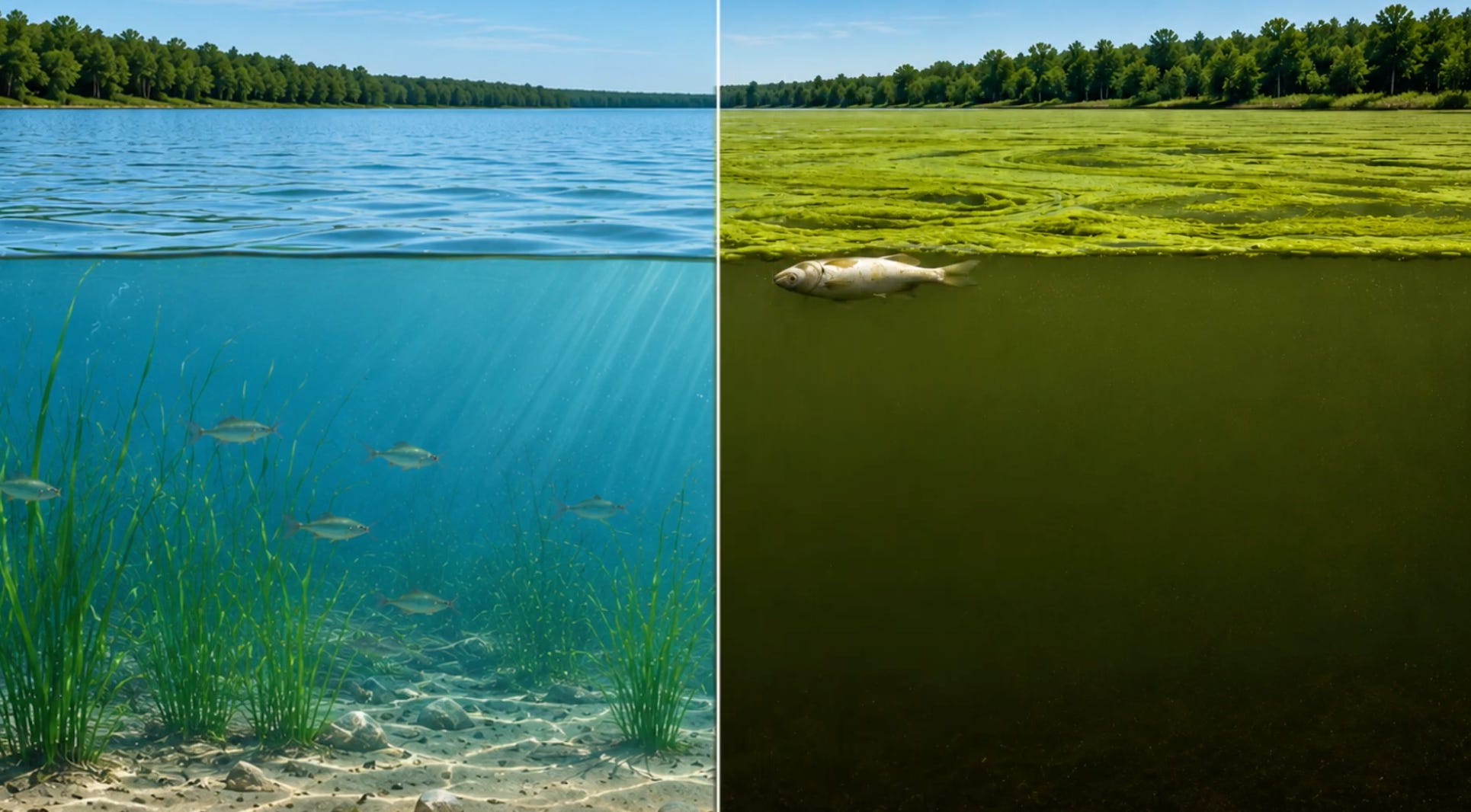
Think about a lake. Ecologists have studied the aging process of lakes extensively. A young, clear lake with abundant plant and animal life will gradually accumulate sediment and nutrient buildup over its lifespan. As it ages, it will become shallower and murkier, eventually reaching a point where it becomes a wetland.
There are ecological forces that regulate the speed of all this happening. The plants filter the water, the clear water lets sunlight reach the plants, fish populations eat the plants, and the algae and bottom feeders filter out the excess nutrients, creating a gradual succession. Humans benefit greatly from young and middle-aged lakes as sources of fresh water, food, and as beautiful places to live near.
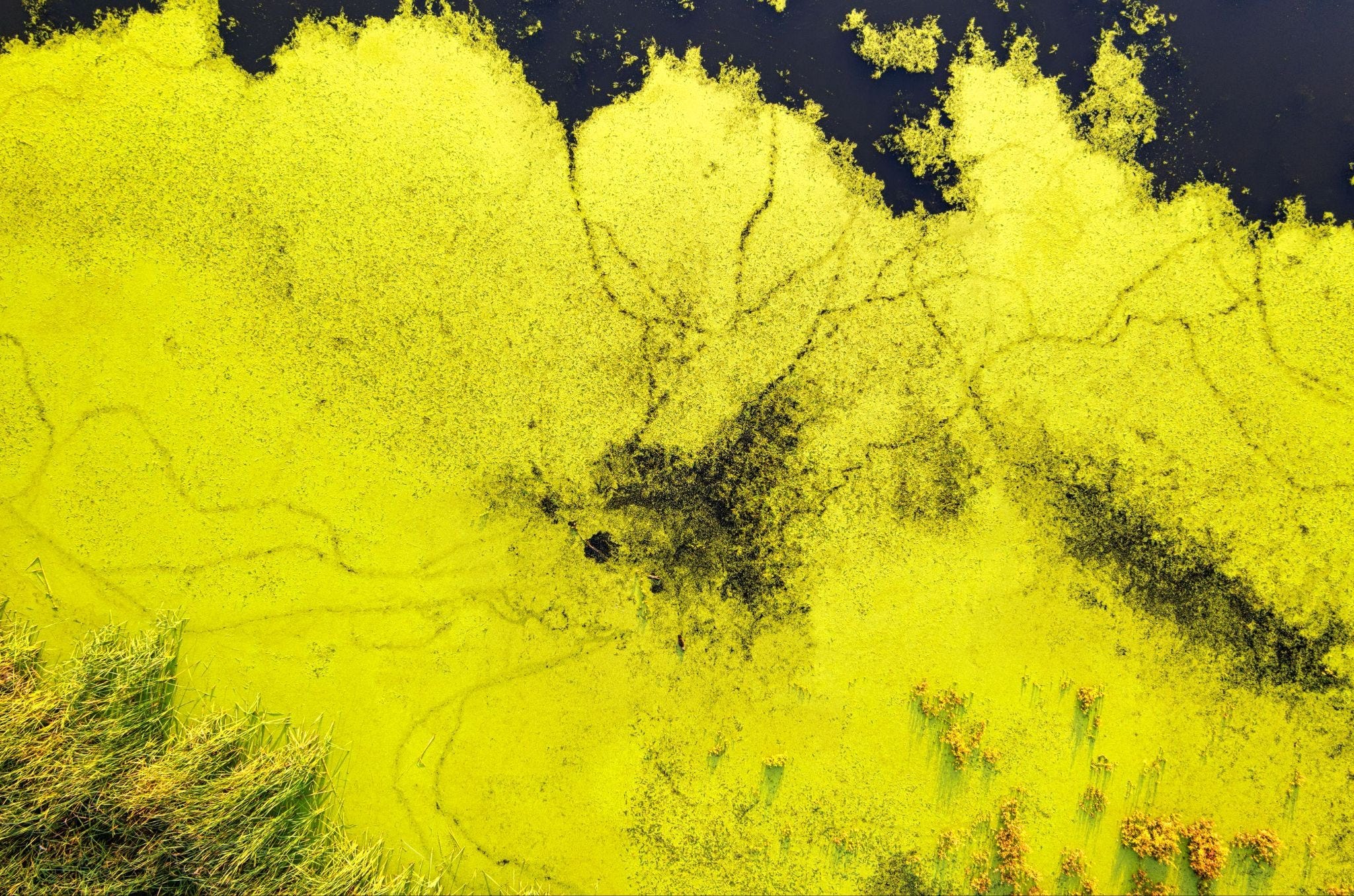
Importantly, we can impact how and when a lake ages depending on how we interact with it. There are regenerative techniques that can expand a lake’s lifespan by increasing water-filtering wildlife, reducing sediment, and nutrients that would naturally run off into the water. These techniques require intention, planning, and energy, but they’re actually quite effective.
Conversely, we can also accelerate and distort this systemic degradation by adding even more nutrient runoff like fertilizer from farms, sewage, or phosphorus, causing the lake to become murkier more quickly. The lake might even flip via algal blooms. The water then becomes thick and cloudy with the suspended sediment, and light can now no longer reach the bottom. Most of the plants die, the oxygen drops, and then the fish die. Plus, the unnatural aging of this system has tipped the lake into a new stable state, a new valley made up of a murky, algae-dominated lake. So this is now a deep, stable valley, because the conditions that maintain the cloudy lifeless murkiness are now in a self-reinforcing loop.
Here’s the interesting, relevant, and (in my opinion) important thing. These are both examples of systemic processes, but the transition between the dynamic life-perpetuating system and the dead zone is profoundly asymmetric. Flipping a clear lake to a murky one might take a few years of excess nutrient loading. Flipping it back, even after you completely stop that nutrient runoff, might take decades or much longer. That’s because you wouldn’t just need to remove the offending pollutant or stressor, you would also need to rebuild the entire ecosystem that was lost: the plants, the oxygen, the fish populations, the nutrient cycles, and the ecological webs.
The Seneca Effect
So the system settled into a new valley, and getting it back out requires climbing a ridge that didn’t exist before. This pattern I just described for lakes shows up everywhere in complex systems, but it also shows up in human societies too.
Think about a society that transitions from democratic governance to authoritarian control during a crisis. Maybe there’s a war or an economic collapse, or maybe there’s gasoline and diesel shortages, and empty store shelves due to military action overseas. Fear and uncertainty spike, people accept restrictions that they wouldn’t normally accept, and a leader consolidates power.
Then surveillance expands and opposition is algorithmized and suppressed, sometimes violently, sometimes through social pressure and institutional capture. The transition from open society to authoritarianism during a crisis can happen in years or decades, such as the slow erosion of the Roman Empire. We’ve also seen it happen in months or even faster, with modern examples of Peru in the 1990s and Tunisia a few years back.
This is what I would label a “behavioral downhill” roll because, once started, it gathered its own momentum. It follows the gravitational logic that we talked about in part two of this series: contraction plus fear pulls power toward consolidation.
But now try to reverse all that, try to rebuild democratic governance after authoritarian rule. You would need, among other things, independent courts and a free press in a landscape where civic habits of debate and disagreement have atrophied. You would need institutional knowledge that was purged and a population that knows what self-governance feels like (and believes that it’s possible). You would need to rebuild trust itself, which is arguably our most valuable resource from neighbor to neighbor, and citizen to government. Such a transition probably takes a generation at minimum, often longer – and sometimes it doesn’t happen at all.
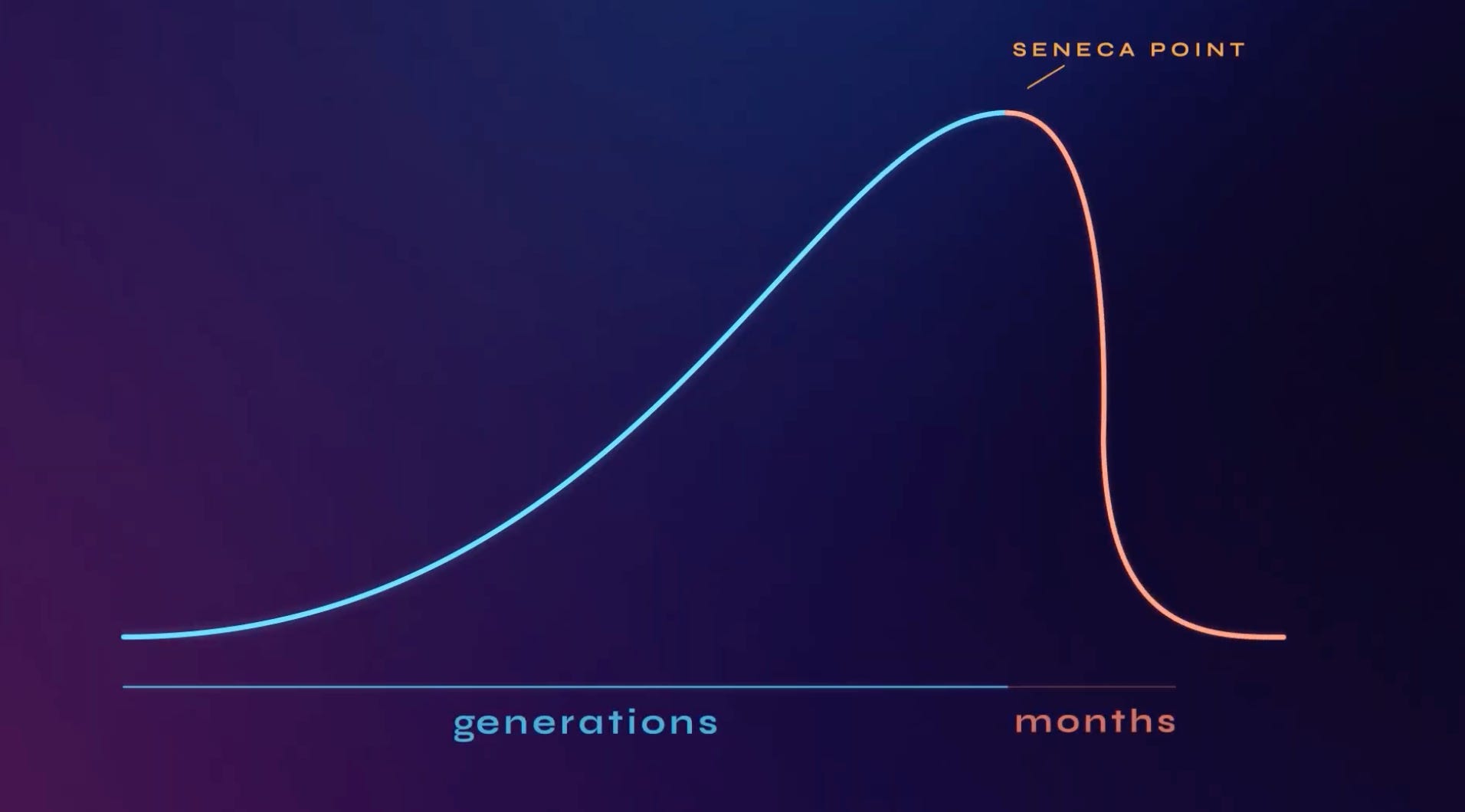
So the transition from democracy to authoritarianism downhill took months, but the transition back takes decades. This asymmetry refers to something my friend Ugo Bardi calls the Seneca effect, where things grow slowly and collapse suddenly. It’s not an accident or bad luck, rather it’s a feature of the landscape topography itself. Organized, high-trust, coordinated systems like democracy and civil discipline require energy, effort, and social engagement to maintain, just like slowing down the aging of a lake system. Degraded, low-trust, coercive systems are, in a thermodynamic sense, the lower energy state. They’re what systems roll toward when you stop investing energy and collective effort in them.. They’re the default societal valley: the place that gravity pulls us when we stop climbing.
This brings me to the practical point of this episode ahead of when we start building composite worlds: the futures that are easiest to reach from the valley we currently inhabit are not necessarily the futures most worth living in. And in contrast, the futures most desirable and worth living in will require some hard climbing.
Dynamic Terrain
To many of the viewers of this channel, it will appear obvious – of course the easiest futures ahead of us are not the most desirable. The most desirable futures for humanity and the biosphere will require sustained effort to reach, and sustained effort to maintain. If we stop climbing, then gravity, both social and ecological, will pull us back down into a valley we don’t want.
An important caveat to this is the landscape we are navigating is not static. It’s dynamic and always changing, whether through human or nonhuman forces. As we move through the peaks and valleys of the terrain, the ground beneath us continues to shift under our feet because of energy descent, climate change, biodiversity loss, and much more. In other words, a future that was uphill in the 1990s may be downhill now or a decade from now, or vice versa. So I like to think about this in terms of what we covered in part two: contraction.
Economic contraction combined with adversarial geopolitics and increased concentration of power is now the path of least resistance. This is now a downhill roll. It does not require any conspiracies or villains, it merely requires people being afraid and leaders responding to fear the way leaders have responded to fear for thousands of years: consolidation, control, surveillance, and walls.
Economic contraction combined with cooperative geopolitics and broadly shared power – that’s something that is possible. That’s uphill from where we are, and it requires people to trust each other during precisely the period when trust is hardest to sustain. It requires leaders to share power when the incentives to consolidate are strong. It will also require communities to coordinate when coordination is the most expensive, tiring, and difficult.

But at the core of the work of The Great Simplification is the idea that uphill does not mean impossible. Plenty of things in nature are uphill and they happen all the time. Every living cell in your body has succeeded in an uphill project. Salmon spend their adult life swimming against the current to spawn. A redwood tree in California spends centuries pulling water hundreds of feet up against gravity. So this landscape metaphor doesn’t tell us that the climb cannot be done. It just informs us that the climb has costs, and what happens if we stop before we’ve reached a more stable resting place on the other side: we slide back.
This is true at every scale: your personal health, your relationships, your community, national and international governance, and the biosphere. These are all states that are maintained with effort. They exist because someone or something is doing ongoing work, and putting in energy, attention, and care to maintain it. The moment that work stops or shifts, the contours of the system’s landscape reassert themselves.
These systems devolve in years or even months because the landscape is always gently but persistently pulling them toward lower energy configurations.
Questions for Part Four
So when we get to part four, where I will walk through four composite worlds I’ve come up with, I invite you to hold this landscape idea in your mind.
I also invite you to sit with a few questions:
Looking at the near and longer term future, where do you see the steep valleys, and where do you see the open ground?
Which civilizational pathways feel uphill from here, and which feel downhill?
Where are you actually standing in this landscape right now? Your sense of the terrain is shaped by where you start.
When you imagine the futures ahead, notice which ones you find yourself wanting and which ones the physics and the data suggest are likely. Are those the same? And if they’re not, what does that tell you?
Four Key Terrain Terms
Before closing, I want to go over the key terms surrounding this terrain that will help carry us through the rest of this series. The landscape itself has two features:
Valleys: the stable states where systems settle and reinforce themselves.
Hills (or more technically ridges): are the barriers between these valleys, the cost of transitioning from one stable state to another.
The valleys and the ridges are the terrain of the future. We don’t choose them. They’re given to us by physics, ecology, and history.
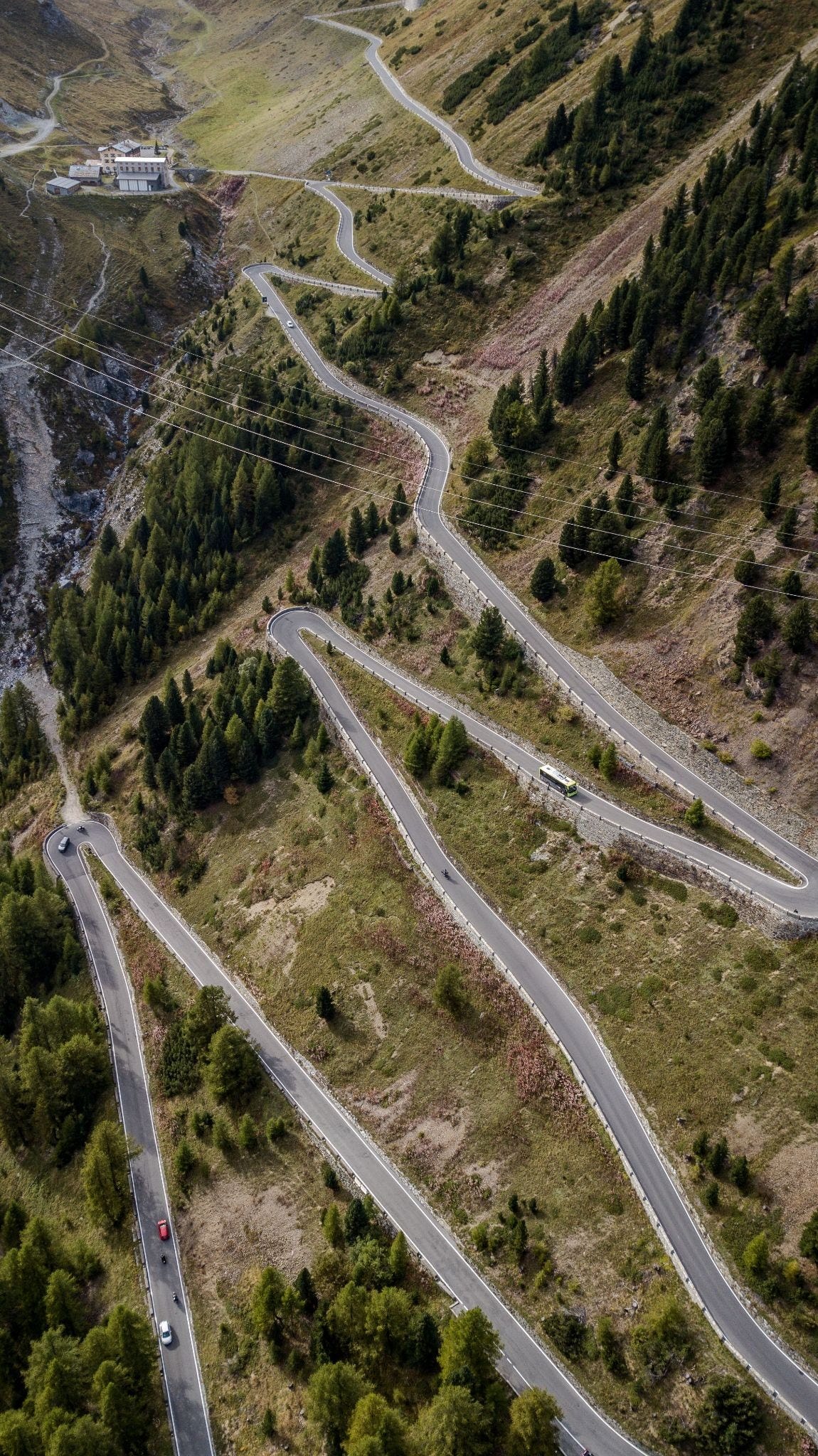
But there are things humans can do to that terrain, specifically in this framework, two general categories. We can create switchbacks by using physical or social technology to carve paths up ridges that would otherwise be too steep to cross: building more social trust, restoring depleted soil, and creating cooperative institutions are all switchbacks. They make paths to cross the ridges possible that weren’t possible before.
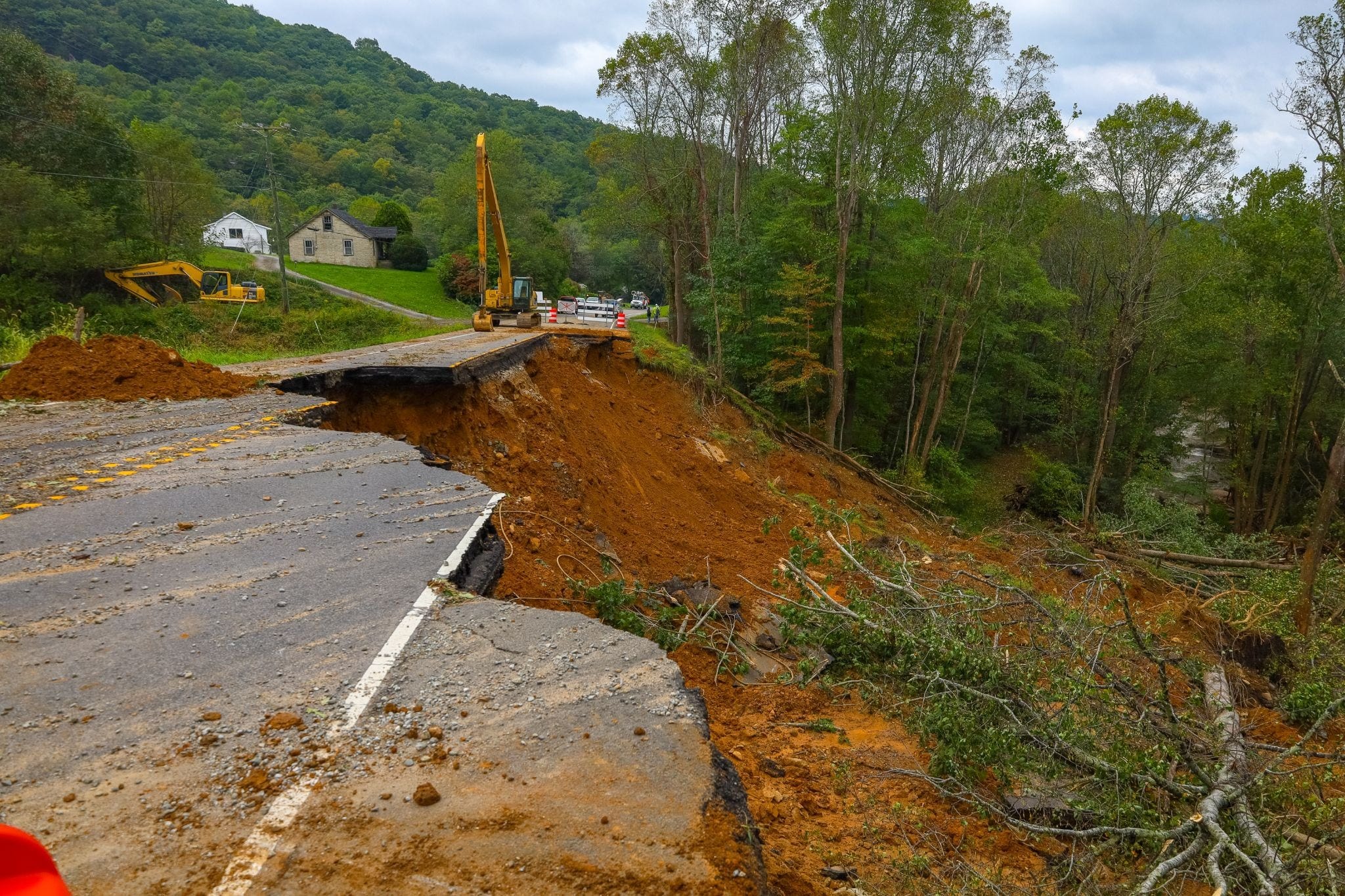
On the other hand, we can erode the trail through actions or through plain neglect. We let the paths disappear, and then the ridges do become impassable. Depleting fossil aquifers or soil, losing civic norms, and building surveillance infrastructure that can’t be dismantled are all forms of erosion.
If erosion happens fast, it leads to washouts of all the switchbacks that have been built. These washouts do not have to be intentional, sometimes it’s just what happens when active switchbacking stops, while gravity and weather do the rest.
So when you hear me describe the composite worlds in part four, ask yourself: which passages are we switchbacking right now? And which ones are we allowing – purposefully or out of neglect – to erode?
Valleys, ridges, switchbacks, and erosion. I hope these ideas will be helpful for visualizing the future.
My last point, though it’s not the focus of this episode, is that these four things don’t only apply to societies. Each of us has valleys and ridges in our own lives. We’re each switchbacking or eroding our own future paths every day, whether we realize it or not.
The composites I’m building and will share are not equally accessible or equally stable, and the transitions between them are also not equally reversible. The landscape of the future of humanity in the biosphere is tilted, and knowing which direction it’s tilted is arguably as important as knowing what the valleys look like once we’re inside them.
Part four will be coming soon. See you then.
As always, thanks for reading.
Want to support The Great Simplification podcast?
The Great Simplification podcast is produced by The Institute for the Study of Energy and Our Future (ISEOF), a 501(c)(3) organization. We want to keep all content completely free to view globally and without ads. If you’d like to support ISEOF and its content via a tax-deductible donation, please use the link below.
Then there's the coulees, Nate. Wrapped and warped, prone to sudden flooding like last weekend in the Driftless.
Lead time is what we have at the moment. It takes longer than one might imagine to learn to grow significant amounts of food in your kitchen garden, where you live, and deal with pests, critters and storage of excesses.
One must learn to eat what one can grow. This is actually a whole lotto learn from experience, not merely reading.
Succession-rotation gardening format for climate zone 8 (adaptable) https://www.johndayblog.com/2016/07/liberty-garden-central-texas-climate.html
Deciding Where To Grow Vegetables https://drjohnsblog.substack.com/p/deciding-where-to-grow-vegetables
Preparing Your Kitchen Garden https://drjohnsblog.substack.com/p/preparing-your-kitchen-garden
Growing Food https://drjohnsblog.substack.com/p/growing-food
I'm glad that you count Ugo Bardi as a friend, Nate.