

Foundations Before Outcomes: The Future Beneath Your Feet
Frankly #150

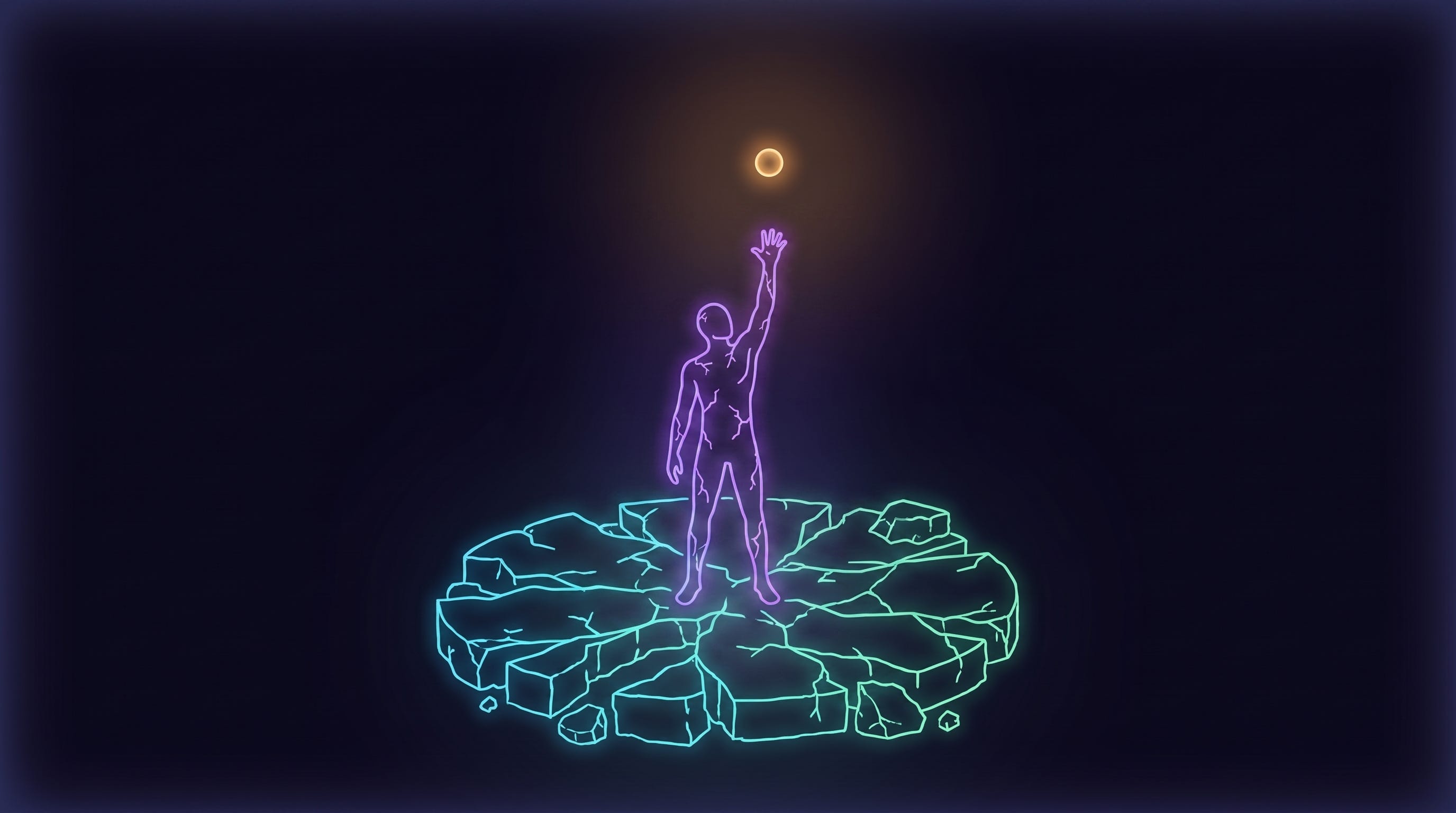
Today, in Part 5 of the “How to Think About the Future” series, I scale my exploration of civilizational futures down to the future of a single human life and analyze how the same patterns that shape economies, power, geopolitics, and Earth systems turn inward. Building on the framework developed throughout the series, I describe how the factors from material throughput to personal agency are underpinned by our own physical/mental health and our web of relationships. I emphasize that we cannot build any stable future on top of cracking foundations, pointing toward the importance of cultivating a strong base of personal health and community to operate from.
By outlining these scenarios – both on the personal and civilizational scales – I challenge the long-held assumptions that equate growth with success. I explore why the most regenerative paths available to us often look like decline from the outside and discuss the ways in which our civilizational foundations have been obscured by a societal trajectory of constant growth. Overall, this episode offers a mirror for reflecting on the landscapes we inhabit today and the quiet work required to navigate toward a better future for humanity and the biosphere.
Are your daily choices strengthening your foundations, or are they slowly eroding the capacity you’ll need for what’s ahead? Which personal future scenario do you feel you’re living in today, and what patterns are quietly shaping where you’re headed? And how would your life change if you measured success by regeneration instead of productivity or growth?
Want to dive deeper into the concepts covered in this episode? Follow along with the Show Notes & Links to Learn More, which you can find at the bottom of the page for every episode of The Great Simplification, or you can download them here.
In case you missed it…
This week, I was joined by Matthew Monahan, co-founder of the nonprofit Ma Earth, to explore the emerging field of regenerative finance. Matthew dug into why top-down, siloed, and low-trust funding systems keep capital from reaching frontline communities, and how tools like open protocols, decentralized data commons, and blockchains might (with healthy consideration) help coordinate trust and resourcing at scale. Matthew also discussed Ma Earth’s collective crowdfunding platform that pairs philanthropic dollars with community fundraising for grassroots land and ecological projects – from mangrove restoration in the Pacific to a farmer’s cooperative for war amputees in the Congo – and how anyone can become involved.
Want to support The Great Simplification podcast?
The Great Simplification podcast is produced by The Institute for the Study of Energy and Our Future (ISEOF), a 501(c)(3) organization. We want to keep all content completely free to view globally and without ads. If you’d like to support ISEOF and its content via a tax-deductible donation, please use the link below.
Thanks Nate. My son and I were just talking about personal actions yesterday, what each of us can do, before societal outcomes 10, 20 and 30 years hence.
those who are personally proactive may have more constructive influence upon the society we co-create.