


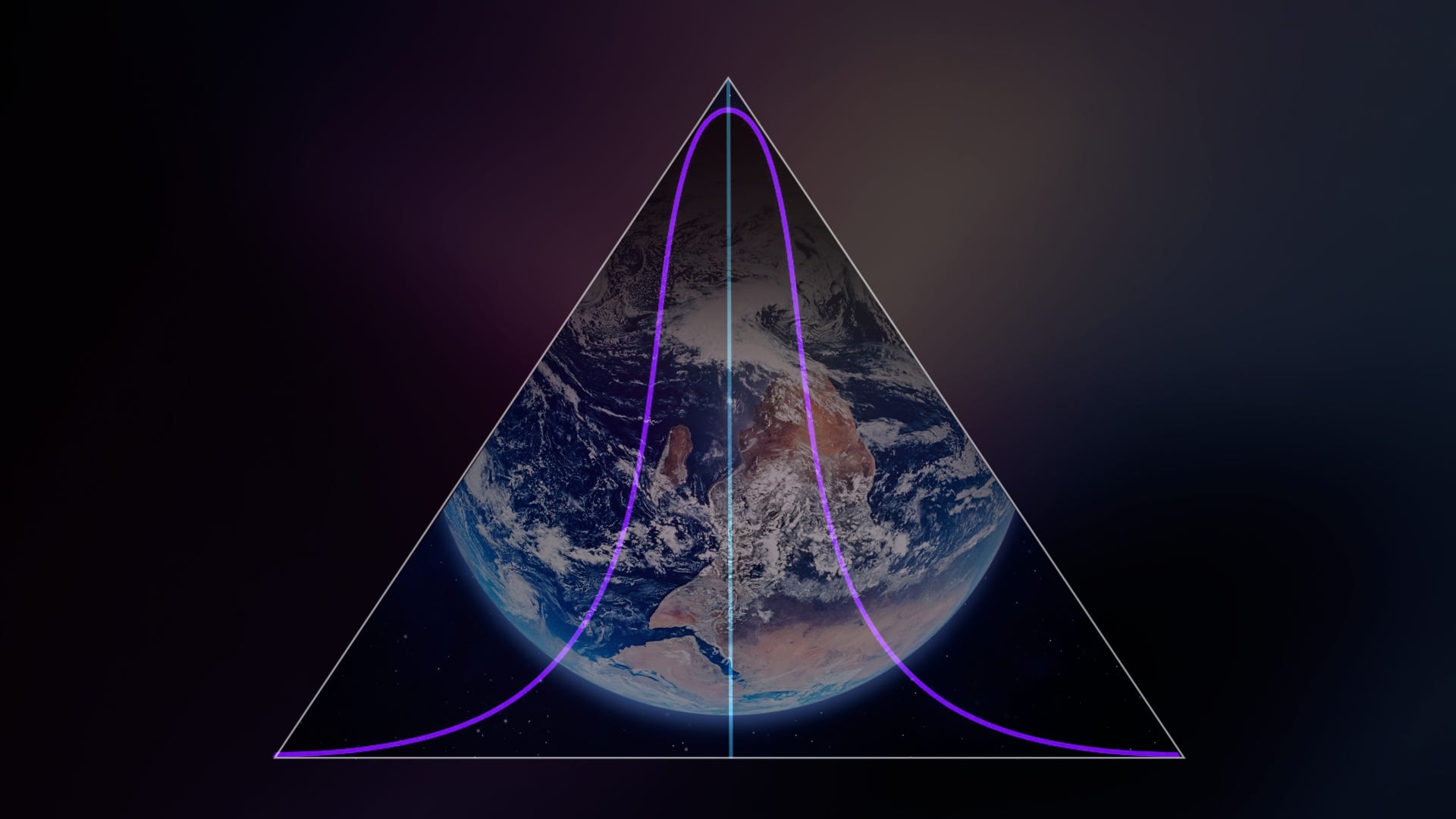
In this week’s Frankly, I return from New York City Climate Week with fresh reflections on the disconnect between our economic narratives and biophysical realities. Using my background in finance, I observe that while the prioritization of financial abstractions and claims continue to accelerate, with gold and silver prices reaching record-setting highs, the ledger is being balanced with parallel declines in our planetary health and social resilience. This tradeoff is harder and harder to ignore as newly crossed planetary boundaries continue alerting us to the fact that we are operating outside of our Earth’s ability to maintain biospheric stability.
I also give an update on Peak Oil, drawing on the International Energy Agency’s recent report regarding the implications of oil and gas field decline rates. I emphasize that the question at hand is not if these energetic supply constraints will affect the trajectory of human systems – rather, the question is when it will come into effect, and how we will respond as a human species.
Given the increasing number of reports on declining oil forecasts, how much longer can our society remain energy-blind? Where might our priorities shift if we truly understood the biophysical limits shaping our future? Lastly, if we were to zoom out towards a wider boundary lens, what types of societal responses become possible that could steer us towards better human and planetary futures?
In case you missed it…
This week, I sat down with Dutch historian and author Rutger Bregman to discuss the concept of moral ambition, which he defines as the desire to be one of the best, measured by different standards of success: not by big payouts or fancy honorifics, but by the ability to tackle the world’s biggest problems. Bregman highlights the importance of entrepreneurs in driving social change and the necessity of cultural shifts to foster a more altruistic society, as well as the challenges faced in pursuing these ideals.
If you want to support The Great Simplification podcast…
The Great Simplification podcast is produced by The Institute for the Study of Energy and Our Future (ISEOF), a 501(c)(3) organization. We want to keep all content completely free to view globally and without ads. If you’d like to support ISEOF and its content via a tax-deductible donation, please use the link below.
We seem to be arriving rapidly at a place in which the cure for the problem is a cure for insanity. Do we lack the science, the intelligence, or the resources to cure our own insanity? I don’t think so.
Then what is the problem? Part of the problem is that our insanity looks a lot like rationality. Those of us speaking from our forebrains all of the time don’t see the problem inside our own heads.
Why is a little cerebral imbalance so important all of a sudden? Because our actions are being multiplied exponentially by technology. More rationality, even if truthful, is like more air fanning the flames of global psychic imbalance.
It would be a good idea to find the cure for insanity now while we are still relatively rational.
OMG, Nate. Thank you. What you called out is absolutely correct. The wars and power struggles currently growing in the world are directly correlated with shifting energy control. It has become clear to me that the huge shakeup going on globally is all about angling for energy power, and I think it’s becoming clear enough to round table. Could you please put that together? Max gratitude for all you do! 💜