

How to Read the Signs of Collapse: Economic Stagnation, Resource Scarcity, and Europe’s Industrial Decline
The Great Simplification #209 with Balázs Matics

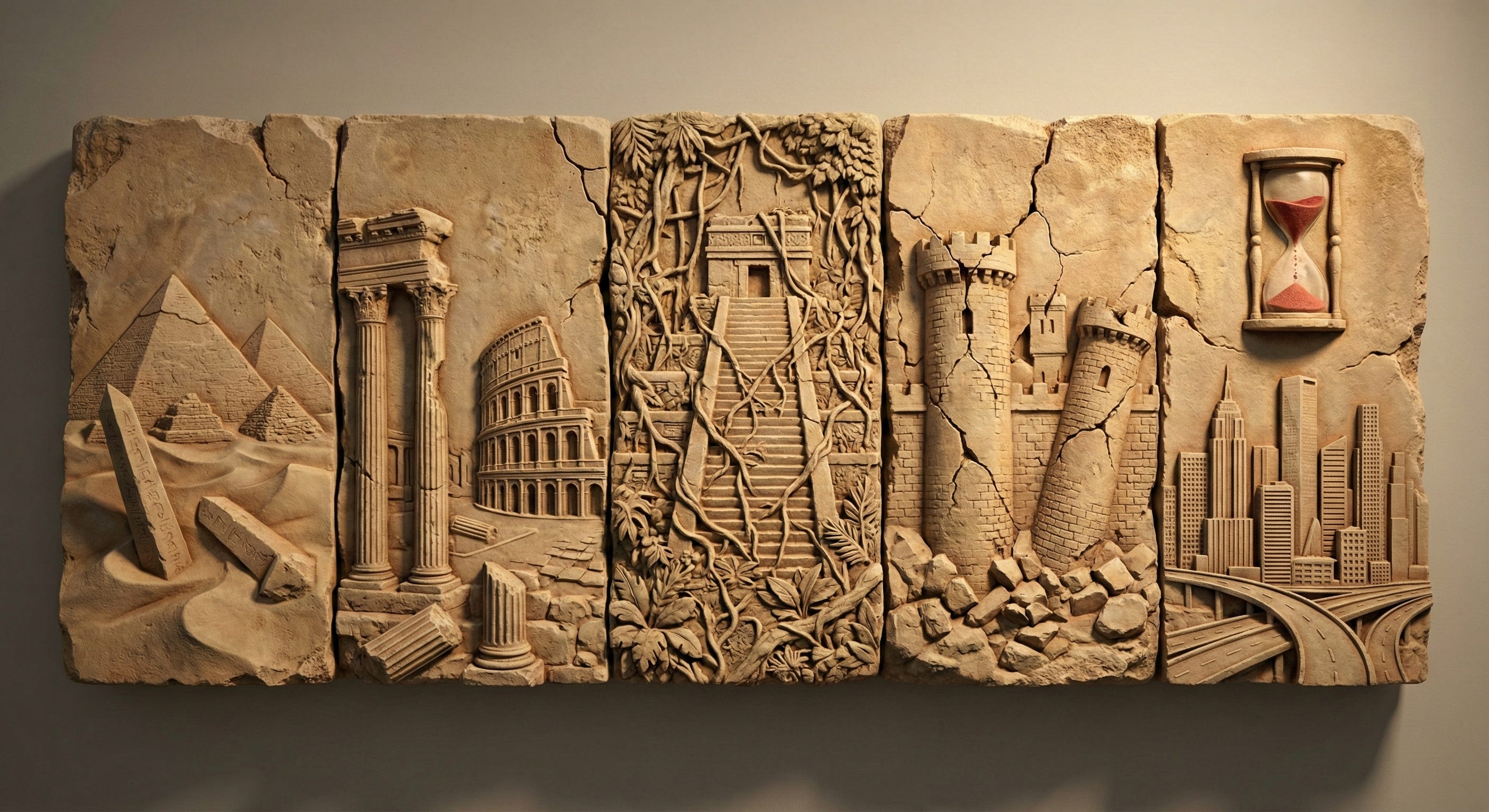
Collapse has long been discussed in the public imagination as something that happens suddenly, immediately turning the world upside down. But history shows that collapse is more often characterized by the slow unraveling of a civilization. Usually, this is due to some combination of resource scarcity, economic stagnation, and compounding disruptions to productive capacity – yet it’s barely perceptible in the day-to-day lives of the people within it. What are the signs that we could be living through such a moment right now, and if we are, how does history tell us to prepare for what’s to come?
Today, I’m joined by Balázs Matics, the author of the popular Substack blog The Honest Sorcerer, to explore the systemic reasons behind civilization’s potential collapse, the importance of energy security, and the growing effects of geopolitical instability. Balázs emphasizes the overlooked importance of industrial inputs such as diesel fuel, and the implications of this as more parts of the world face resource scarcities. Together, we also discuss the possibilities of more localized production and communities rooted in compassion and cooperation as ways to navigate a post-growth future.
As economic, geopolitical, and resource issues become more pressing, what will this mean for the future of environmental concerns such as global heating? What economic and industrial signals should governments actually be paying attention to in order to understand the health of a society? Finally, how can the humans paying attention to this story open up discourse where they live and start sowing the seeds of more resilient communities, even as the web of global complexity unravels?
In case you missed it…
In my previous Frankly, I shared my reflections on a recent seminal essay posted by Anthropic CEO Dario Amodei, likening Artificial Intelligence as a “rite of passage” for the human species rather than just a narrow technological breakthrough. Amodei posits the possibility that we are now in what Carl Sagan once called a phase of “technological adolescence,” wherein humans’ technologies and tools become powerful enough to reshape or destabilize civilization faster than our collective wisdom can keep up. As a civilizational force, AI doesn’t automatically act as humanity’s salvation or catastrophe – it acts as a mirror that reflects the maturity (or immaturity) of the humans – and systems – deploying it.
If you want to support The Great Simplification podcast…
The Great Simplification podcast is produced by The Institute for the Study of Energy and Our Future (ISEOF), a 501(c)(3) organization. We want to keep all content completely free to view globally and without ads. If you’d like to support ISEOF and its content via a tax-deductible donation, please use the link below.